
The Best High-End Espresso Machines for Home Baristas
Ten machines for home baristas ready to move past entry-level espresso, from a $699 manual lever to a $4,500 La Marzocco, compared on heating, control and how much of the work they do for you.
Here's the short answer: the best high-end espresso machine is the one that fits how you drink coffee. If you mostly make lattes and want the machine to handle the hard parts, the Breville Oracle Jet and Oracle Dual Boiler grind, tamp and steam milk for you. If you want a classic hands-on machine that brews and steams at the same time, the Rancilio Silvia Pro X is the value dual boiler and the Rocket Appartamento TCA is the best-looking heat exchanger. If you want to control every second of the shot, look at the Lelit Bianca V3 or the Decent DE1PRO. And if you'd rather just press a button, the Jura Z10 is the high end of bean-to-cup.
We haven't tested these machines in our own kitchen yet. The picks and specs below come from manufacturer and authorized-retailer listings, and prices were checked in October 2026. Prices change often, so check the retailer before you buy.
High-End Espresso Machines Compared
| Machine | Type | Heating | Built-in grinder | Price | Best for |
|---|---|---|---|---|---|
| Breville Oracle Jet | Automated | Dual thermojet | Yes | $1,999.95 | Easy café-style milk drinks |
| Rancilio Silvia Pro X | Dual boiler | Dual boiler (0.3 L brew, 1 L steam) | No | $2,195 | Best-value dual boiler |
| Rocket Espresso Appartamento TCA | Heat exchanger | 1.8 L heat exchanger | No | $2,050–$2,350 | Small kitchens, classic style |
| Lelit Bianca V3 | Flow control | Dual boiler (0.8 L brew, 1.5 L steam) | No | $2,999.95 | Shaping every shot by hand |
| La Marzocco Linea Micra | Dual boiler | Dual boiler (0.25 L brew, 1.6 L steam) | No | $4,500 | Café-grade build at home |
| Decent DE1PRO | Profiling | No traditional boiler | No | $3,699 | Experimenting with shot profiles |
| Breville Oracle Dual Boiler | Automated | Dual stainless boilers | Yes | $2,999.95 | Back-to-back lattes, hands-free |
| Nuova Simonelli Oscar II | Heat exchanger | 2 L copper heat exchanger | No | $1,995 | Strong steam for milk drinks |
| Jura Z10 | Super-automatic | Bean-to-cup | Yes | $4,499 | Push-button hot and cold drinks |
| Flair 58 Plus 2 | Manual lever | Heated brew head | No | $699 | Hands-on espresso under $1,000 |
Ten machines worth the counter space.
Each card covers what the machine does best and where to buy it. We may earn a commission when you buy through our links, at no extra cost to you.
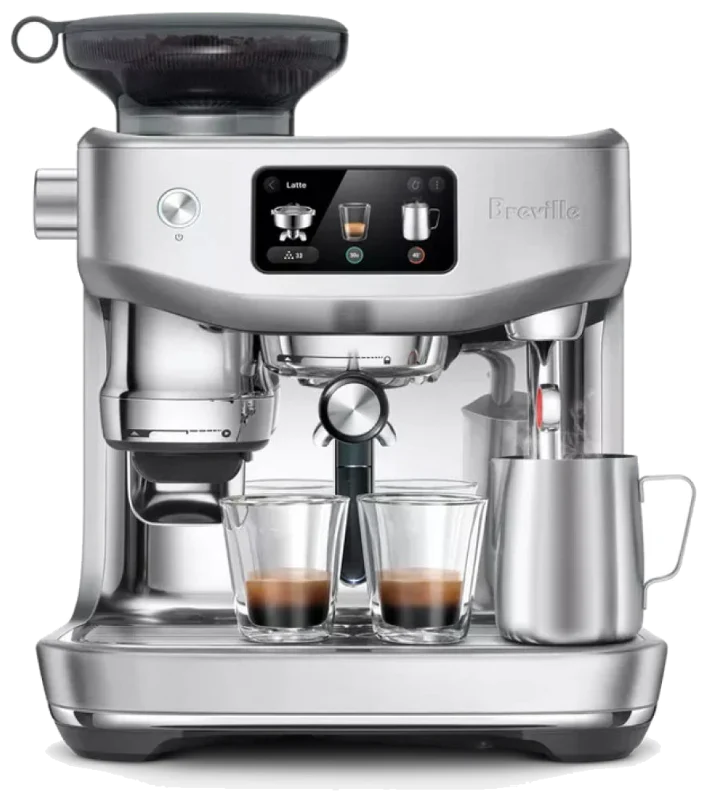
Breville Oracle Jet
The Oracle Jet does most of a barista's job for you. Baratza-designed burrs grind straight into the 58mm portafilter, the machine doses and tamps, and the MilQ steam wand textures milk to temperature on its own. It heats with two thermojet elements instead of boilers, so it's quick to get going.
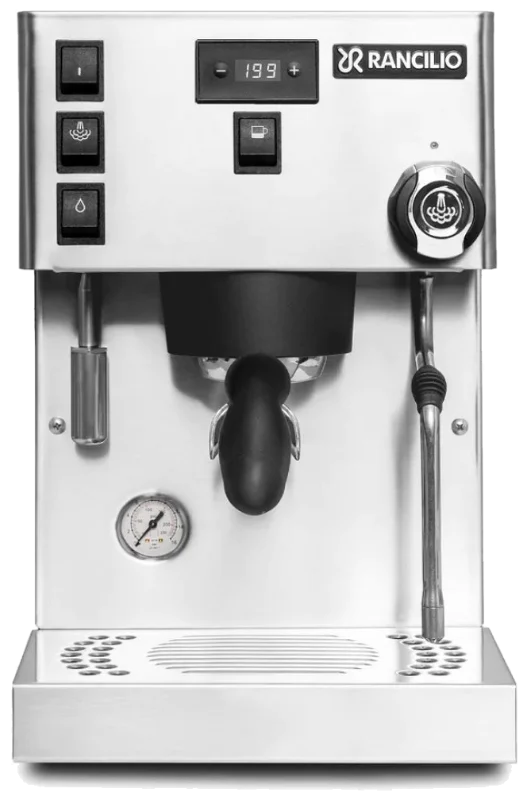
Rancilio Silvia Pro X
Rancilio took its famously sturdy Silvia and gave it a second boiler, so you can brew and steam at the same time. Each boiler has its own PID, there's adjustable low-pressure preinfusion, and the front display doubles as a shot timer. It's a hands-on machine built to last, and you'll need a separate grinder.
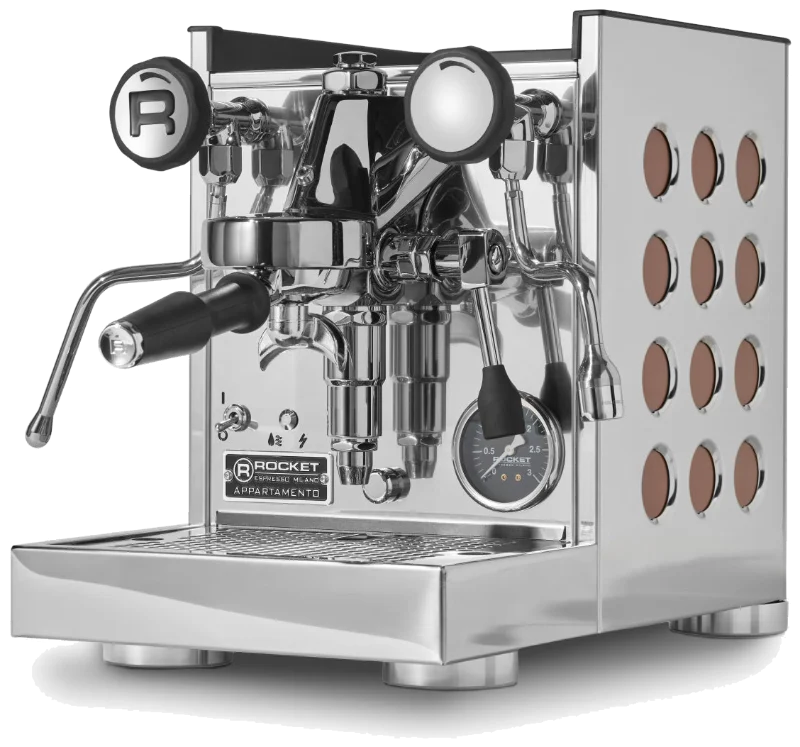
Rocket Espresso Appartamento TCA
Handmade in Milan, the Appartamento TCA is one of the best-looking machines you can put on a counter, and at 10.7 inches wide it fits small kitchens. Its 1.8-liter heat exchanger boiler lets you brew and steam at once, and a hybrid PID gives you four brew temperatures you pick at the brew lever. It has a 3-year manufacturer warranty.
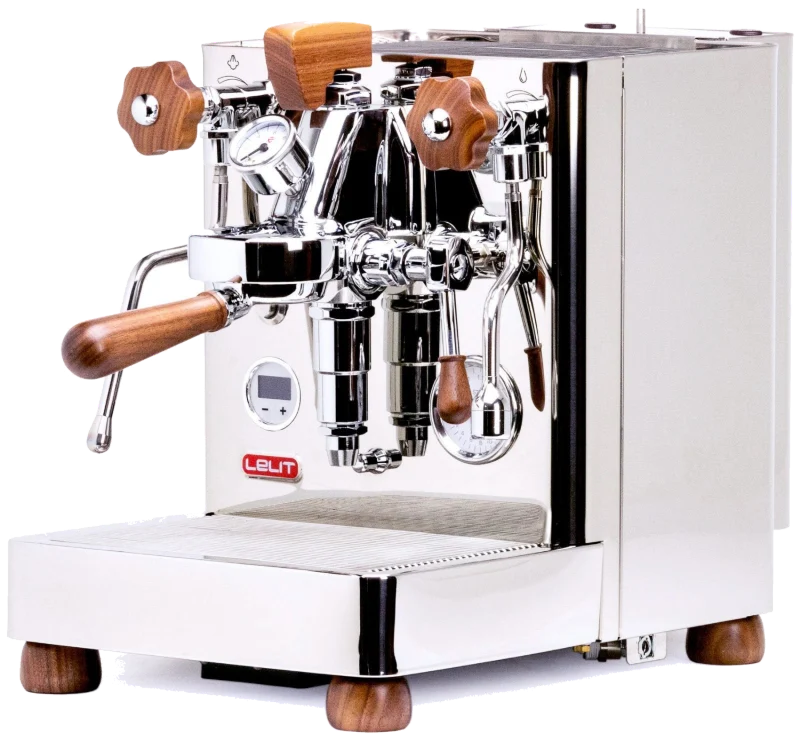
Lelit Bianca V3
The Bianca is for home baristas who want to shape every shot. A wooden paddle on the E61 group changes water flow mid-shot, so you can try long preinfusions, gentle ramps and the slower shots light roasts often like. Dual boilers with PID keep temperatures steady, and it runs from its 2.5-liter tank or plumbed into a water line.
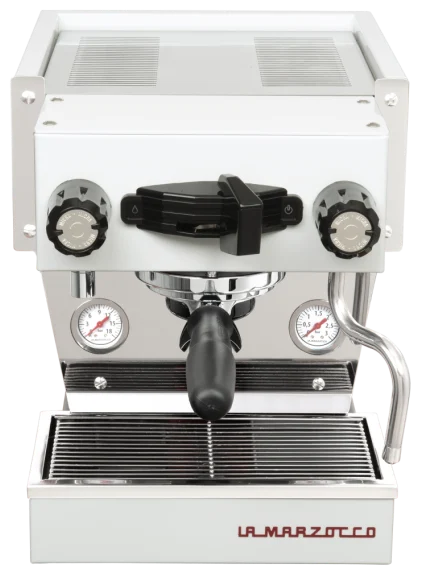
La Marzocco Linea Micra
The Linea Micra is a scaled-down version of La Marzocco's Linea Classic S café machine, sized for a kitchen at 13 inches tall and 42 pounds. Dual boilers and PID temperature control keep shots consistent, and the 1.6-liter steam boiler handles milk with ease. Its convertible portafilter switches between single spout, double spout and bottomless.
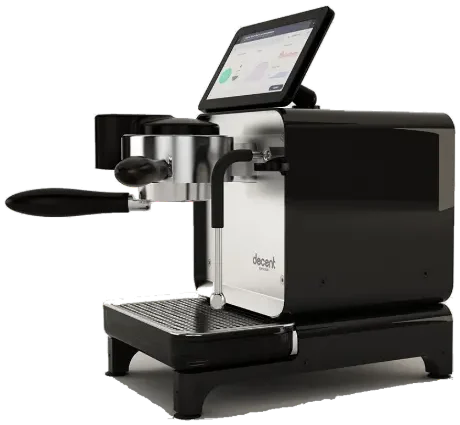
Decent DE1PRO
The DE1PRO works differently from everything else here. It's controlled from an included 8.7-inch tablet, where you can load shot profiles that change pressure, flow and temperature second by second, then see a graph of exactly what happened. It's the most data-driven machine on the list, and Decent guarantees it to 200,000 shots.
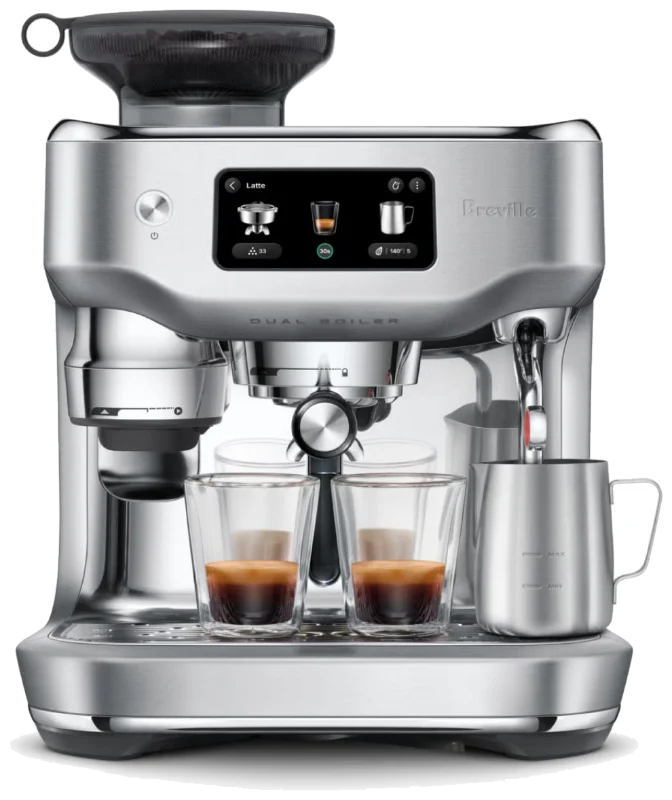
Breville Oracle Dual Boiler
Breville's top Oracle swaps the Jet's thermojet heating for stainless dual boilers plus a group heater, so it can pull a shot and steam milk at the same time. You still get the built-in grinder, hands-free dosing and tamping, and MilQ automatic milk texturing. Choose it over the Jet if you often make several milk drinks in a row.
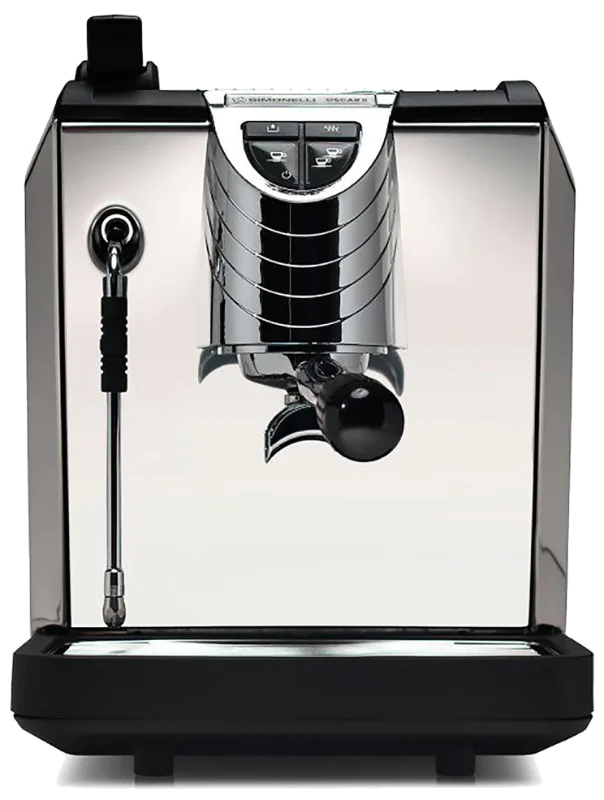
Nuova Simonelli Oscar II
The Oscar II brings Nuova Simonelli's café-machine engineering to a compact home espresso machine. Its 2-liter copper heat exchanger boiler is built for steaming, which makes it a good match if you mostly drink cappuccinos and lattes. You can run it from the 2.8-liter tank, or buy the plumbed-in version.
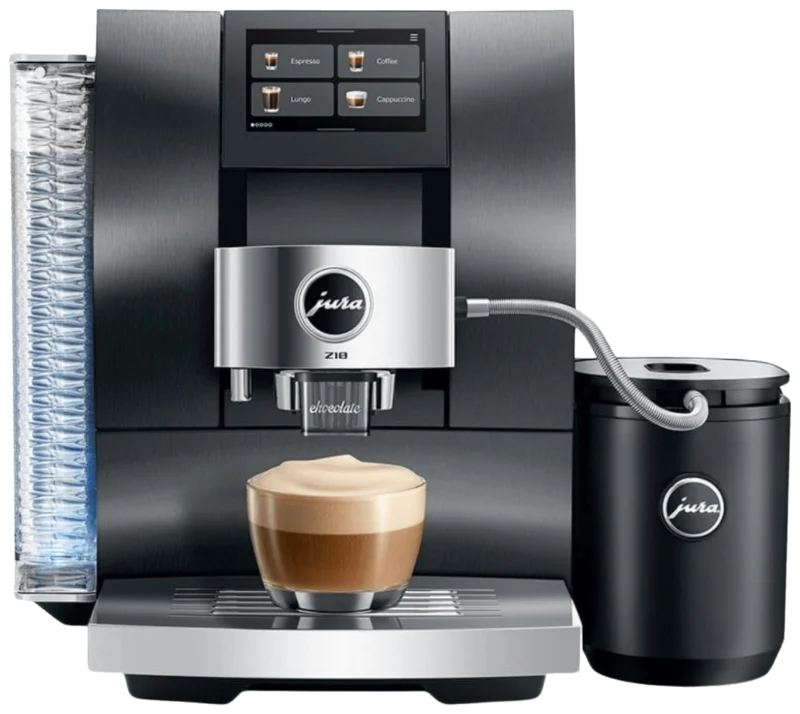
Jura Z10
If you want excellent coffee at the touch of a button, the Z10 is the high end of bean-to-cup. Its P.R.G.2+ grinder adjusts for each drink, and Jura's Cold Extraction Process makes cold coffee drinks quickly (it isn't overnight cold brew). Milk and milk foam come from one central spout, and it holds about 2.4 liters of water and 280 grams of beans.
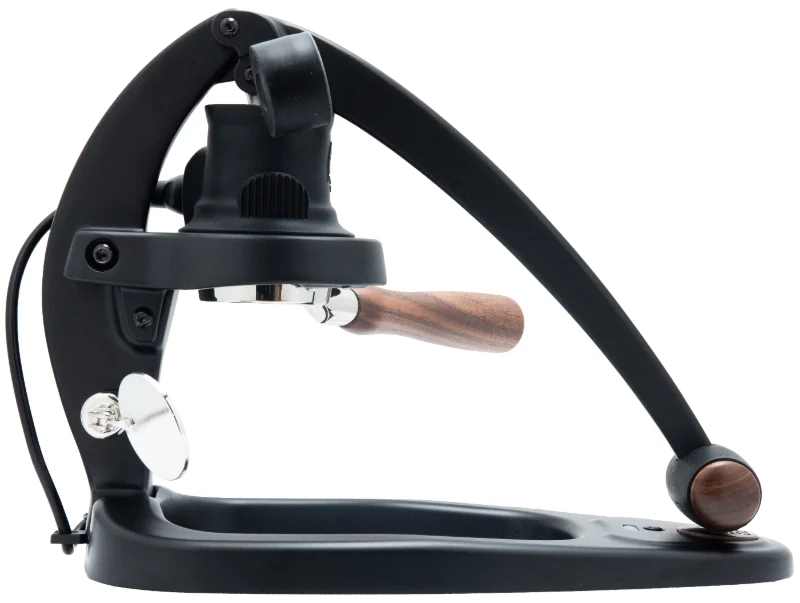
Flair 58 Plus 2
The Flair 58 Plus 2 is the budget pick here, but it's a serious espresso tool. You make the pressure yourself with the lever and watch it on the built-in gauge, while the base preheats the brew head to 185°F, 194°F or 203°F for dark, medium or light roasts. It carries a 5-year limited warranty. You'll need a kettle, a good grinder and a separate way to steam milk.
How to Choose a High-End Espresso Machine for Home
Once you're spending more than about $1,500, almost every machine can make excellent espresso. What you're really choosing is how the machine heats water, how much control it gives you over the shot, and how much of the work it does for you.
Boiler Type: Heat Exchanger, Dual Boiler or Thermojet
- Heat exchanger (HX): one large steam boiler with a tube running through it that heats brew water on its way to the group. You can brew and steam at once, and steam power is usually strong. Brew temperature can creep up when the machine sits idle, so some owners run a quick cooling flush before a shot. Examples: Rocket Appartamento TCA, Nuova Simonelli Oscar II.
- Dual boiler: separate boilers for brewing and steaming, each held at its own temperature. It's the most stable setup and makes back-to-back milk drinks easy. Examples: Rancilio Silvia Pro X, Lelit Bianca V3, La Marzocco Linea Micra, Breville Oracle Dual Boiler.
- Thermojet or thermoblock: heats water on demand instead of keeping a boiler hot, so the machine is ready quickly. Example: Breville Oracle Jet.
The Decent DE1PRO doesn't use a traditional boiler either. It's built around electronic control of water temperature, pressure and flow.
PID Temperature Control
A PID controller holds the water at the temperature you set, usually to the degree. Most machines on this list have one, and the Rocket's hybrid PID gives you four preset brew temperatures. It matters most if you switch between roasts: light roasts often taste best brewed hotter, and dark roasts can turn bitter when the water is too hot.
Pressure and Flow Profiling
Most machines push water through the coffee at a steady pump pressure, around 9 bar. Profiling lets you change pressure or flow during the shot, often with a gentle start to soak the puck, a peak, then a taper. It can bring out more sweetness and clarity, especially in light roasts, but it adds a learning curve. The Lelit Bianca does it by hand with a paddle, the Decent does it electronically with saved profiles, and the Flair does it through your arm on the lever.
Group Head: E61 or Something Else
The E61 is a classic, heavy chrome group used on many machines, including the Rocket and the Lelit. It's easy to service and lots of accessories fit it, but it takes a while to heat up. Other designs heat the group directly or build it into the boiler, which helps keep temperatures stable and can shorten warm-up.
Semi-Automatic, Automated or Super-Automatic
- Semi-automatic: you grind, dose, tamp and start and stop the shot. That's the Rancilio, Rocket, Lelit, Linea Micra and Oscar II.
- Automated semi-automatic: the Breville Oracles grind, dose, tamp and steam milk for you, but you still lock in the portafilter and get café-style results.
- Super-automatic: the Jura Z10 does everything inside the machine at the touch of a button.
- Manual lever: the Flair has no pump at all. You create the pressure yourself.
Water Tank or Plumbed In
Plumbing a machine into your water line means no refilling. Among these picks, the Lelit Bianca V3 runs from its tank or plumbed in, and the Nuova Simonelli Oscar II comes in a plumbed-in version. Whichever you choose, use filtered or softened water, since hard water leaves scale that can damage boilers and valves over time.
Budget for a Good Grinder
Except for the two Oracles and the Jura, every machine here needs a separate espresso grinder, and the grinder matters as much as the machine for shot quality. A great machine with a weak grinder makes mediocre espresso, so plan your budget for both.
Space, Power and Warm-Up
Measure before you buy, especially depth and the height under your cabinets, and leave room to refill a top-loading tank. Heavy E61 and dual boiler machines can take 10 to 20 minutes to fully heat, so many owners use a timer to warm them up before breakfast. The Silvia Pro X has a programmable wake-up time built in.
Warranty and Service
Check who handles repairs before you buy. Coverage on this list ranges from a 1-year manufacturer warranty for home use on the Oscar II to 3 years on the Rocket and a 5-year limited warranty on the Flair's frame and brew head. Some retailers add their own coverage too: Clive Coffee adds a 3-year parts and labor warranty to the Lelit Bianca. Buying from an authorized dealer usually makes warranty service easier.
How We Chose These Machines
We looked for machines that sell in the US, cover the main ways of making espresso at home, and come from brands with solid dealer and parts support. Specs come from each manufacturer or an authorized retailer, and prices were checked in October 2026. We haven't tested these machines ourselves yet. When we do, we'll add our own notes. Read more about our approach.
Frequently Asked Questions About High-End Espresso Machines
What Is the Best High-End Espresso Machine for Home?
There isn't one best machine for everyone. If you drink milk drinks and want help, the Breville Oracle Jet is the easiest high-end choice. If you want a hands-on machine, a dual boiler like the Rancilio Silvia Pro X or Lelit Bianca V3 gives very stable shots for the money, and the La Marzocco Linea Micra brings café-machine build quality to the kitchen.
Is a $2,000 Espresso Machine Worth It?
It can be if you make espresso most days. Higher-end machines hold temperature more steadily, steam milk faster, use heavier materials and are designed to be repaired rather than replaced. If you only pull a few shots a week, a good grinder paired with a simpler machine closes much of the gap.
What's the Difference Between a Heat Exchanger and a Dual Boiler?
A heat exchanger uses one steam boiler and heats brew water as it passes through a tube inside it. A dual boiler has a separate boiler for brewing, so brew temperature is easier to control. Both let you brew and steam at the same time.
Do I Need a Separate Grinder?
For most machines here, yes. The Breville Oracle Jet and Oracle Dual Boiler have grinders built in, and the Jura Z10 grinds automatically. Every other machine on this list needs a separate espresso grinder.
What Is Flow Profiling, and Do I Need It?
Flow profiling means changing how fast water moves through the coffee during the shot. It can make light roasts taste sweeter and clearer, but it isn't required for great espresso. If you mostly drink medium or dark roasts with milk, a stable dual boiler or heat exchanger is plenty.
Which High-End Espresso Machine Is Best for Beginners?
The Breville Oracle Jet is the friendliest, since it grinds, tamps and steams milk for you and guides you through dialing in. If you don't want to learn espresso technique at all, a super-automatic like the Jura Z10 does everything at the press of a button.
Can I Plumb In a Home Espresso Machine?
Some, yes. The Lelit Bianca V3 can run from its tank or be plumbed in, and the Nuova Simonelli Oscar II is sold in a plumbed-in version. Check the exact model before you buy, and plan for water filtration.
What Beans Should I Use in a High-End Espresso Machine?
Fresh, whole bean coffee from a roaster you like matters more than the label. Our guide to the best beans for espresso walks through roast levels and origins, and you can browse every espresso-friendly coffee we feature.
So, Which Espresso Machine Should You Get?
Start with how you drink. Lots of milk drinks and little patience for dialing in points to the Breville Oracles. A classic hands-on routine points to the Silvia Pro X, the Rocket or the Oscar II. If you want to chase the best possible shot, the Lelit Bianca, Linea Micra and Decent are the deep end. And if you want it all at the push of a button, there's the Jura Z10. Whichever you pick, pair it with a good grinder and fresh beans.